
Physical Therapy Claims Look Simple. They Are Not.
Physical Therapy Billing Services
One timed code billed wrong. Eight-minute rule not followed. Two therapists treating the same patient on the same day without the right modifier. Every one of these gets a claim denied.
Physical therapy billing has its own rules, timed codes, untimed codes, functional limitation reporting, and Medicare-specific documentation requirements. A billing team without PT-specific expertise misses these details constantly.
GenMediTech provides physical therapy billing services built around the exact rules that keep PT claims paid.
Schedule Free Consultation
- 98% First Pass Clean Claim Rate
- 24–48 Hours Claim Turnaround
- 30% Reduction in A/R
- 100% HIPAA-Compliant
Why Physical Therapy Billing Is Different
Physical therapy billing runs on rules that do not apply to most other specialties. Miss any one of them and the claim comes back.
Eight-Minute Rule Not Applied Correctly
Medicare uses the eight-minute rule to determine how many timed units can be billed per session. Total treatment time must be calculated correctly across all timed codes. Bill one unit too many and the claim gets downcoded or denied.
Timed and Untimed Codes Mixed Up
Some PT codes are timed, 97110, 97530, 97012, and billed in 15-minute units. Others are untimed, 97001, 97035, and billed once per session regardless of time spent. Mixing them up causes incorrect billing and payer denials.
KX Modifier Missing on Medicare Claims
Medicare requires modifier KX on PT claims to certify that the service meets medical necessity criteria. Without it Medicare denies the claim. When a patient exceeds the therapy cap threshold modifier KX is also required to continue billing.
GP Modifier Not Applied
Medicare requires modifier GP on all physical therapy services to indicate the service was provided under a PT plan of care. Missing it results in automatic denial.
Plan of Care Not Documented or Recertified
Medicare requires a signed plan of care before PT services begin. It must be recertified every 90 days. Claims billed without a current signed plan of care get denied on review.
Functional Limitation Reporting Missed
Medicare requires functional limitation G-codes and severity modifiers on PT claims at the start of care, every tenth visit, and at discharge. Missing these codes results in claim rejection.
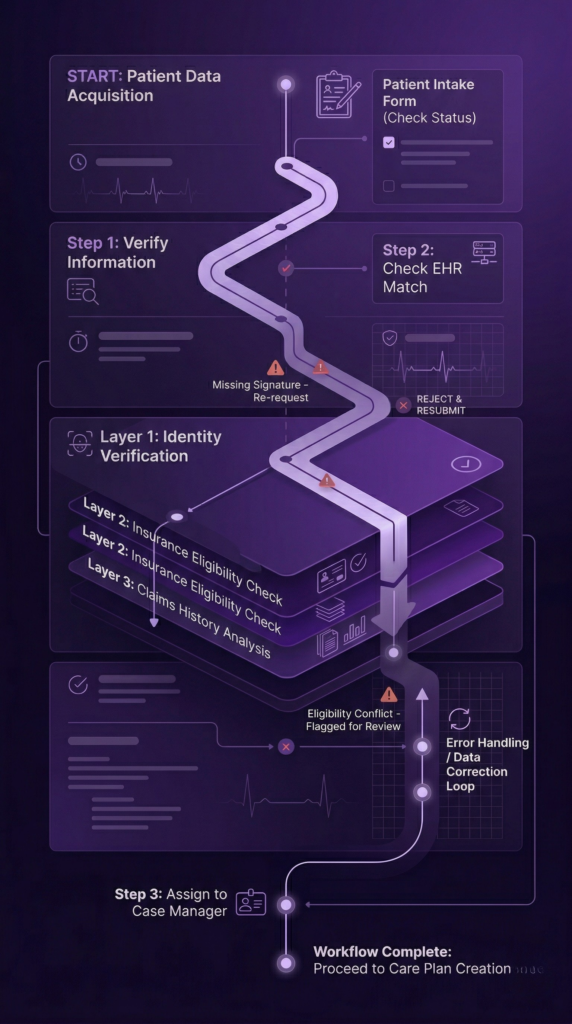
Our Physical Therapy Billing Services
Timed and Untimed Code Billing
We assign the correct PT procedure codes, timed and untimed, based on documentation. Timed codes are calculated using the eight-minute rule. Untimed codes are billed once per session. Every unit count is verified before submission.
Eight-Minute Rule Calculation
We calculate total timed treatment minutes per session and apply the eight-minute rule correctly to determine billable units. No overbilling. No underbilling.
Medicare Modifier Management
We apply modifier KX when medical necessity criteria are met and when patients exceed the therapy cap threshold. Modifier GP is applied to every Medicare PT claim. Both are applied correctly every time.
Plan of Care Management
We track plan of care certification dates and alert your team before the 90-day recertification deadline, while virtual assistant services can support patient scheduling, reminder calls, document follow-up, and front-desk communication between visits. No claim goes out without a current signed plan of care on file.
Functional Limitation G-Code Reporting
We apply the correct functional limitation G-codes and severity modifiers at the start of care, at every tenth visit, and at discharge, keeping Medicare claims compliant and paid.
Evaluation and Re-Evaluation Coding
PT evaluations are coded under CPT 97161, 97162, or 97163 based on complexity. Re-evaluations are billed under CPT 97164. We select the correct level based on documented complexity, not habit.
Prior Authorization Management
Commercial payers often require authorization for PT visits, and accurate insurance eligibility verification helps confirm coverage, visit limits, and authorization requirements before treatment begins. We manage the full pre-authorization process and track authorized visit counts so no claim goes out past what the payer approved.
Denial Management and Appeals
Every denial gets reviewed for root cause, modifier error, eight-minute rule violation, missing plan of care, or authorization issue. We correct and resubmit with proper documentation every time.
Medicare and Commercial Payer Billing
Medicare PT billing has its own rules, KX modifier, GP modifier, therapy cap, functional limitation reporting, and plan of care requirements. Commercial payers have their own visit limits and authorization rules. We follow both correctly.
Physical Therapy CPT and HCPCS Codes We Work With
A structured, transparent workflow, so you always know where your application stands.
Evaluations and Re-Evaluations
CPT 97161 is for a low complexity PT evaluation. CPT 97162 goes on moderate complexity cases. CPT 97163 is used when the evaluation is high complexity. CPT 97164 is for re-evaluation, but only when the patient's condition has changed enough to warrant it.
Therapeutic Procedures — Timed Codes
CPT 97110 is therapeutic exercise billed in 15-minute units. CPT 97530 covers therapeutic activities, also 15 minutes per unit. CPT 97150 is used when two or more patients are treated in a group during the same session. CPT 97112 is neuromuscular reeducation, 15 minutes per unit. CPT 97116 covers gait training in 15-minute units.
Physical Agents and Modalities — Untimed Codes
CPT 97010 is a hot or cold pack, billed once per session regardless of time.CPT 97012 is mechanical traction, a modality that may also overlap with documentation and payer workflows used in chiropractic billing services.. CPT 97014 covers unattended electrical stimulation. CPT 97018 is a paraffin bath. CPT 97022 is whirlpool therapy. CPT 97035 is ultrasound therapy billed in 15-minute units.
Manual Therapy — Timed Codes
CPT 97140 covers manual therapy techniques in 15-minute units. CPT 97750 is used for physical performance testing or measurement.
Work Conditioning and Functional Testing
CPT 97545 covers work hardening or conditioning for the first two hours. CPT 97546 is billed for each additional hour beyond that.
Common ICD-10-CM Codes
M54.5 for low back pain. M54.2 for cervicalgia. M79.3 for panniculitis. S13 series for cervical sprains. S33 series for lumbar sprains. M47 series for spondylosis. G57 series for mononeuropathies of lower limb. M25 series for joint disorders. S40 through S99 series for upper and lower extremity injuries. G35 for multiple sclerosis. I69 series for sequelae of cerebrovascular disease, common in neurological PT.
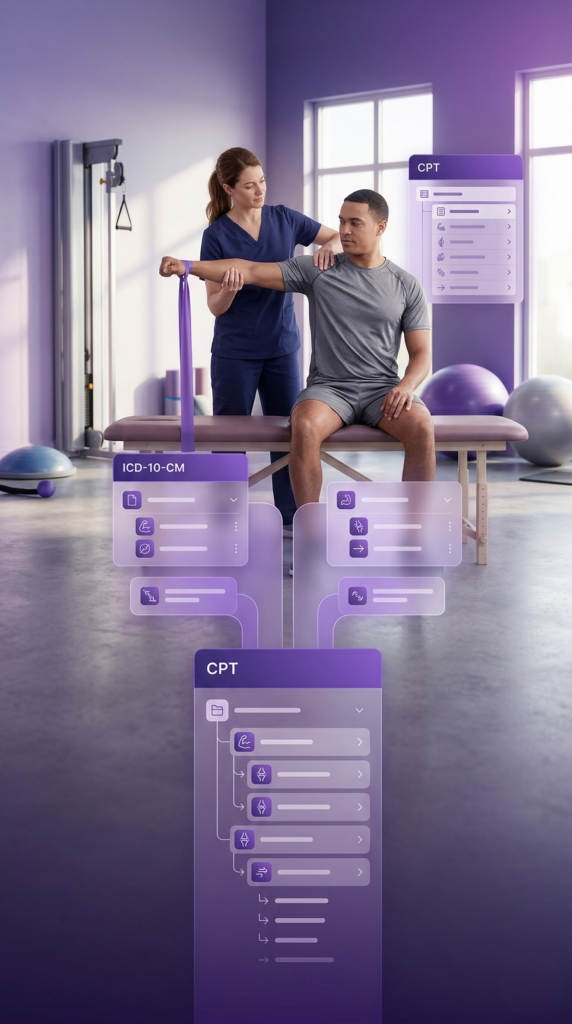
Procedures We Bill for Physical Therapy Practices
Every service below requires correct CPT code selection, accurate unit calculation, and proper modifier application. We handle all of them.
- Therapeutic Exercise
- Neuromuscular Reeducation
- Manual Therapy
- Gait Training
- Therapeutic Activities
- Ultrasound Therapy
- Physical Performance Testing
- Electrical Stimulation
- Mechanical Traction
- Work Hardening and Conditioning
- Aquatic Therapy
- PT Evaluations and Re-Evaluations
- Group Therapeutic Procedures
Physical Therapy Billing Problems We Fix Every Day
Eight-minute rule calculated wrong
We recalculate timed treatment minutes and correct unit counts before resubmission. Overbilling and underbilling both get fixed.

KX modifier missing on Medicare claims
We apply modifier KX when medical necessity criteria are met and track therapy cap thresholds per patient. Medicare denials from missing KX stop immediately.

GP modifier not applied
Every Medicare PT claim gets modifier GP. We verify it is on every claim before submission.

Plan of care expired or unsigned
We track certification and recertification dates and alert your team before the 90-day deadline. No claim goes out without a current signed plan of care.

Functional limitation G-codes missing
We apply the correct G-codes and severity modifiers at start of care, every tenth visit, and at discharge. No Medicare claim goes out without them.

Visit limit denial from commercial payer
We track authorized visits per payer and alert your team before limits are reached. An AI virtual assistant can also support appointment reminders, visit-related patient questions, and follow-up communication before the next therapy session is scheduled. Nothing gets billed past what the payer has approved.
Frequently Asked Questions
Medicare uses the eight-minute rule to determine how many 15-minute timed units can be billed per session. A timed code must be performed for at least eight minutes to bill one unit. Total timed minutes across all timed codes determine the total billable units. Getting this wrong causes downcoding or denial on every session.
Modifier KX is required on Medicare PT claims to certify that the service meets medical necessity criteria. It is also required when a patient's charges exceed the Medicare therapy cap threshold to continue billing. Without it Medicare denies the claim.
Modifier GP indicates that the service was provided under a physical therapy plan of care. Medicare requires it on every PT claim. Missing it results in automatic denial.
Medicare requires the plan of care to be certified by a physician or qualified non-physician practitioner before PT services begin. It must be recertified every 90 days. Claims billed without a current signed plan of care get denied on review.
Yes. We apply the correct functional limitation G-codes and severity modifiers at the start of care, at every tenth visit, and at discharge — keeping Medicare claims fully compliant.
Yes. Group therapeutic procedures are billed under CPT 97150. We apply it correctly when two or more patients are treated simultaneously.
We identify the exact denial reason — modifier error, eight-minute rule violation, missing plan of care, or authorization issue — fix it at the source, and resubmit. Denial patterns are tracked so the same problem does not repeat.
Yes. Every workflow at GenMediTech follows strict HIPAA protocols, encrypted data handling and controlled access at every step.
Physical Therapy Revenue Lost to Billing Errors Is Revenue Your Practice Already Earned.
Eight-minute rule miscalculated. KX modifier missing. The plan of care expired. Functional limitation G-codes not reported. Every one of these is money your practice earned and never collected.
Our physical therapy billing specialists are ready to fix that, starting now.