
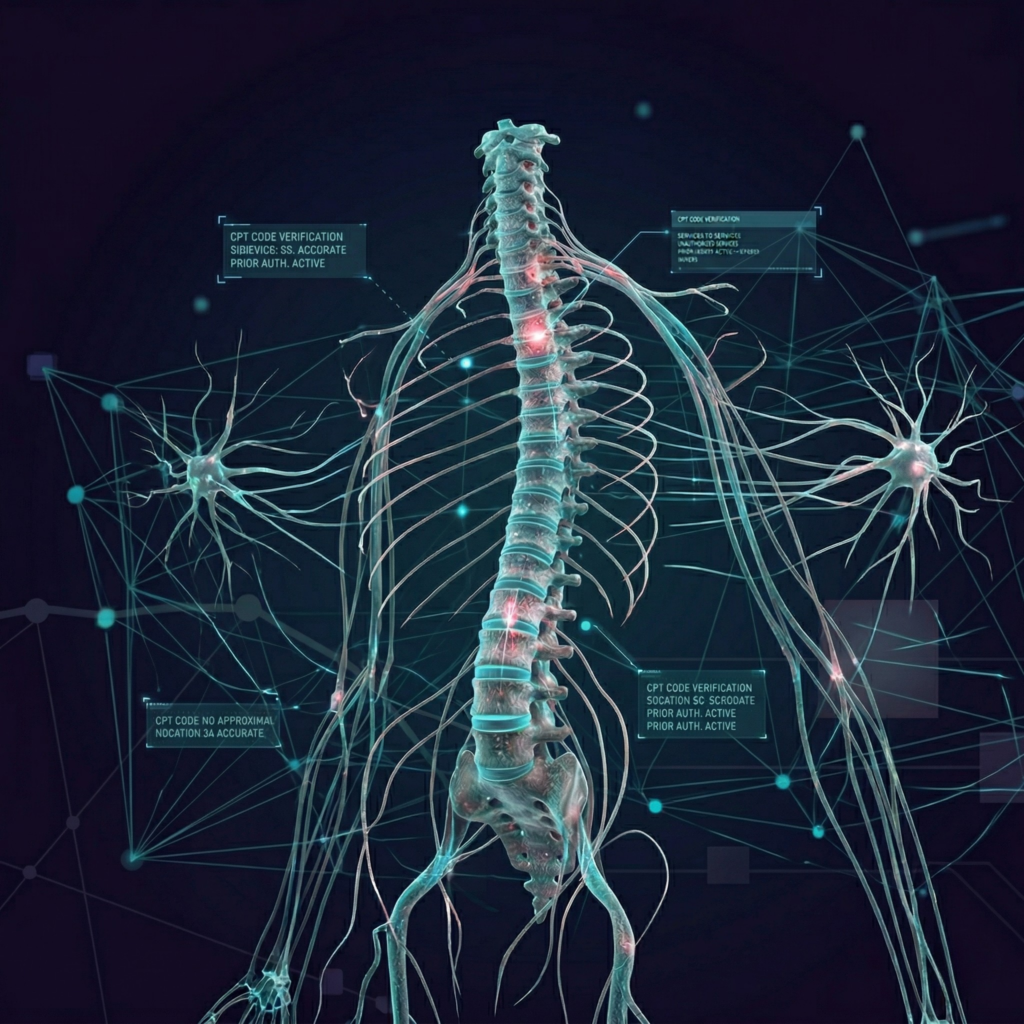


Pain Management Billing Services

Pain Management Claims Get Denied More Than Most Specialties. Here Is Exactly Why.

Spinal injections. Nerve blocks. Radiofrequency ablation. These are high-cost procedures with complex coding requirements. One wrong CPT code. One missing modifier. One prior authorization gap. That is all it takes for a claim to get denied — and in pain management that denial is expensive.

GenMediTech provides pain management billing services built around the exact coding, modifier, and documentation requirements that keep high-value procedure claims paid.

banner pain management

Why Pain Management Billing Is Complex

Pain management practices deal with some of the most procedure-heavy billing in medicine. Every procedure has its own CPT code, its own modifier rules, and its own prior authorization requirements.

Payers scrutinize pain management claims heavily. Medical necessity must be documented for every intervention. Imaging guidance must be billed separately and correctly. Bilateral procedures need the right modifier. One mistake on any of these and a high-value claim comes back denied.

These are the billing problems pain management practices deal with every day.

Prior Authorization Not Obtained

Spinal injections, nerve blocks, and neuromodulation procedures almost always require prior authorization. Skip it once and the claim will not get paid, regardless of how well the procedure was performed or documented.

Wrong Procedure Code Selected

Pain management CPT codes are highly specific. A cervical epidural injection is not coded the same as a lumbar epidural. A trigger point injection for one muscle is not the same as multiple muscles. Wrong code means wrong reimbursement or an outright denial.

Modifier Errors on Complex Claims

Pain management claims require frequent use of modifiers, 26, TC, LT, RT, 50, 51, 76, 77, 59, and others. Missing or incorrect modifiers on imaging guidance, bilateral procedures, and repeat injections are among the most common denial causes.

Imaging Guidance Not Billed Separately

 Fluoroscopic and ultrasound guidance used during injections must be billed separately under the correct CPT codes. Many practices either miss this billing entirely or bundle it incorrectly, losing significant revenue on every procedure.

Medical Necessity Documentation Gaps

Payers require documented proof that conservative treatments were tried before approving interventional procedures. Missing this documentation leads to medical necessity denials that are difficult to appeal.

Spinal Cord Stimulation and Neuromodulation Billing Missed

SCS trial and permanent implant billing is complex and high value. Incorrect coding of the trial period, implant, and programming visits costs thousands per patient.,

Pain Management CPT Codes We Work With

Evaluation and Management

CPT 99202–99205 covers new patient office visits. CPT 99211–99215 covers established patient visits. Modifier 25 is required when E&M is billed on the same day as a procedure.

Trigger Point and Joint Injections

CPT 20552 covers trigger point injection for one or two muscles. CPT 20553 is for three or more muscles. CPT 20610 covers aspiration or injection of a major joint. CPT 20611 is used when ultrasound guidance is performed with the injection.

Epidural Injections

CPT 62320 covers cervical or thoracic epidural injection without imaging guidance. CPT 62321 is for the same with imaging guidance. CPT 62322 covers lumbar or sacral epidural without imaging. CPT 62323 is for lumbar or sacral with imaging guidance.

Nerve Blocks

CPT 64479 covers cervical or thoracic transforaminal epidural injection. CPT 64483 is for lumbar or sacral transforaminal epidural injection. CPT 64490 covers cervical or thoracic facet joint injection. CPT 64493 is for lumbar or sacral facet joint injection. CPT 64455 covers nerve blocks for Morton's neuroma.

Radiofrequency Ablation

CPT 64633 covers RFA of cervical or thoracic facet joint nerves. CPT 64635 is for lumbar or sacral facet joint nerve ablation. Additional level codes 64634 and 64636 apply for each additional joint treated.

Spinal Cord Stimulation

CPT 63650 covers percutaneous implantation of neurostimulator electrodes. CPT 63685 is for insertion of spinal neurostimulator pulse generator. CPT 95971 and 95972 cover SCS programming visits.

Imaging Guidance

CPT 77002 covers fluoroscopic guidance for needle placement. CPT 77003 is for fluoroscopic guidance during spinal injections. CPT 76942 covers ultrasound guidance for needle placement.

Infusion Therapy

CPT 96365 covers intravenous infusion for therapy up to one hour. CPT 96366 is for each additional hour beyond the first.

Common ICD-10-CM Codes

M54.5 for low back pain. M54.41 and M54.42 for lumbago with sciatica. M54.2 for cervicalgia. M47 series for spondylosis. G89 series for pain not elsewhere classified, chronic pain and neoplasm-related pain. M79.3 for panniculitis. M54.3 for sciatica. S13 series for cervical sprains and strains. S33 series for lumbar sprains and strains.

codes we work with 2

Our Pain Management Billing Services

Procedure Specific CPT Coding

Procedure-Specific CPT Coding

Every pain management procedure has its own code. We assign the correct CPT code for every injection, nerve block, ablation, and neuromodulation procedure, based on what is documented, not estimated.
Prior Authorization Management

Prior Authorization Management

We handle pre-authorization for every procedure that requires it, spinal injections, RFA, SCS trials, and implants. Nothing gets scheduled for billing without the right approval in place.

Modifier Management

Modifier Management

Pain management claims require precise modifier usage. We apply modifiers 26, TC, LT, RT, 50, 51, 76, 77, and 59 correctly based on payer rules and documentation. Every modifier is supported by what is in the chart.

Imaging Guidance Billing

Imaging Guidance Billing

Fluoroscopic guidance, ultrasound guidance, and CT guidance are billed separately under the correct CPT codes, 77002, 76942, 77003, when documentation supports their use. No imaging revenue gets left on the table.

Medical Necessity Documentation Review

Evaluation and Management Coding

New patient evaluations and established patient visits are coded under the correct E&M level, 99202 through 99215. Modifier 25 is applied correctly when E&M is billed on the same day as a procedure.
Spinal Cord Stimulation and Neuromodulation Billing

Spinal Cord Stimulation and Neuromodulation Billing

SCS trial periods, permanent implants, and programming visits are coded and billed correctly. Every component of the neuromodulation episode is captured, from the trial to the final implant.

Denial Management and Appeals

Denial Management and Appeals

Every denial gets reviewed for root cause, authorization issue, modifier error, medical necessity gap, or coding error. We correct it and resubmit with proper documentation every time.

Medicare and Commercial Payer Billin

Medicare and Commercial Payer Billing

Medicare and commercial payers follow different rules for pain management procedures. We know those differences and bill each payer according to their specific coverage policies and documentation requirements.

Patient Collections Support

Patient Collections Support

Co-pays, deductibles, and self-pay balances are handled with clear patient statements and consistent follow-up, improving collections without damaging patient relationships.

Procedures We Bill for Pain Management Practices

Every procedure below requires specialty-specific coding, correct modifier application, and accurate diagnosis linkage. We handle all of them.

Pain Management Billing Problems We Fix Every Day

Prior authorization denied or missing?

We track authorization requirements per payer and per procedure. Nothing gets billed without the right approval and supporting documentation.

Wrong injection code selected?

Cervical and lumbar injections are not interchangeable. With or without imaging guidance changes the code entirely. We verify documentation and assign the correct code every time.

Modifier error causing denial?

LT, RT, 50, 76, 77, 26, TC, each one has a specific purpose and payer-specific rules. We apply every modifier correctly and only when documentation supports it.

RFA billed incorrectly?

RFA coding depends on the spinal level and number of joints treated. We code every ablation correctly, primary level and each additional level billed separately where applicable.

A/R aging past 90 days?

We work every aging bucket consistently until outstanding balances are recovered. Nothing sits unworked.

Frequently Asked Questions

Pain management involves high-cost interventional procedures — epidural injections, nerve blocks, RFA, spinal cord stimulation — each with specific CPT codes, modifier requirements, and prior authorization rules. Payers scrutinize these claims heavily. One coding error or missing modifier on a high-value procedure means significant revenue lost.

Yes. We manage pre-authorization for every procedure that requires it — including spinal injections, radiofrequency ablation, and spinal cord stimulation. Nothing moves forward without the right approval in place.

Fluoroscopic and ultrasound guidance must be billed separately from the primary procedure using the correct CPT codes — 77002, 77003, or 76942. We capture every eligible imaging guidance code and make sure it is supported by documentation.

Yes. SCS billing covers the trial period, permanent implant, and programming visits. Each phase has its own CPT codes and documentation requirements. We handle the complete SCS billing episode correctly.

Bilateral procedures require modifier 50 or separate line items with LT and RT modifiers depending on the payer. We verify payer-specific requirements and apply the correct billing method every time.

We work with modifiers 25, 26, TC, LT, RT, 50, 51, 59, 76, 77, and others depending on the procedure and payer. Every modifier is applied based on documentation and payer-specific rules.

We identify the exact denial reason — authorization issue, modifier error, medical necessity gap, or coding error — fix it at the source, and resubmit. Denial patterns are tracked so the same problem does not repeat.

Yes. Every workflow at GenMediTech follows strict HIPAA protocols — encrypted data handling and controlled access at every step.

Pain Management Revenue Lost to Denials Is Revenue Your Practice Already Earned.

Wrong injection codes. Missing imaging guidance billing. Prior authorization gaps. Modifier errors on high-value procedures. Every one of these is money your practice earned and never collected.

Our pain management billing specialists are ready to fix that, starting now.

Scroll to Top